How to Choose Wedding Bands That Match Your Lifestyle
Your wedding day marks the beginning of a new chapter, but the rings you exchange are intended to remain with you long after the celebration ends. A wedding band should reflect your personal style while also feeling comfortable and practical throughout your everyday routine.
Appearance will naturally play an important role in your decision. You may prefer a polished gold band, a design with diamond accents, a modern mixed metal style, or a simple band with understated detailing. However, the ring should not only look beautiful. Its metal, width, profile, finish, and fit should also work with the way you use your hands each day.
At Joyce’s Jewelry, we believe choosing a wedding band is about finding the right balance between personal meaning and everyday wearability. Understanding the differences between available options can help you select a ring that feels like a natural part of your life.
Start With Your Daily Routine
Before comparing individual bands, think about what a typical day looks like for you.
Do you spend most of your time working at a computer? Are you frequently using your hands, handling equipment, caring for patients, completing household projects, or participating in sports? Do you prefer jewelry that feels substantial, or do you rarely wear rings and want something lighter?
The answers can help guide your choice.
Someone who works primarily at a desk may be comfortable with a wider band or more detailed design. A person who frequently works with their hands may prefer a smoother profile with fewer raised elements. Those who are not accustomed to wearing rings often appreciate a narrower band or a comfort fit interior.
Your hobbies matter as well. Gardening, weight training, home improvement projects, swimming, and other physical activities can expose a wedding band to pressure, scratches, moisture, and impact. Even a durable ring should be removed when an activity could damage the jewelry or place your finger at risk.
The goal is not to find a ring that is completely unaffected by wear. Most wedding bands will develop small signs of use over time. Instead, look for a design that suits your routine and ages in a way you will appreciate.
Comparing Wedding Band Metals
The metal establishes much of a wedding band’s appearance, weight, maintenance needs, and overall character. Joyce’s offers precious metal wedding bands, mixed metal wedding bands, and alternative metal wedding bands, giving couples several directions to consider.
Yellow Gold
Yellow gold is a traditional wedding band choice with a naturally warm appearance. It works especially well for someone who appreciates classic jewelry or regularly wears other yellow gold pieces.
Joyce’s selection includes wedding bands made with 14K and 18K yellow gold. The karat indicates the proportion of pure gold within the metal. Because pure gold is naturally soft, it is combined with other metals to make it more suitable for jewelry.
A 14K gold wedding band generally offers a practical combination of beauty and durability for frequent wear. An 18K gold band contains a higher proportion of gold, giving it a richer appearance, but it may show signs of wear more readily.
Yellow gold can develop fine scratches and surface changes over time. Many couples view those marks as part of the ring’s history, while others choose to have their bands professionally cleaned and polished periodically.
White Gold
White gold offers the lasting appeal of gold with a bright, neutral color. It pairs naturally with white metal engagement ring settings, diamond jewelry, watches, and other accessories.
Joyce’s precious metal wedding band collection includes both 14K and 18K white gold options. White gold is often chosen by people who want a refined appearance that feels both traditional and current.
As with other gold jewelry, white gold can develop small scratches through everyday wear. Its appearance may also require occasional professional maintenance depending on the ring’s construction and finish. Regular inspections and proper care can help preserve the band’s condition.
Rose Gold
Rose gold has a warm, softly colored appearance created by the metals combined with gold. It can feel romantic and distinctive while remaining easy to coordinate with other jewelry.
Joyce’s carries precious metal bands in 14K and 18K rose gold, along with designs that combine rose gold with white gold. Rose gold may be especially appealing to someone who wants a wedding band that stands apart from more traditional yellow or white metal styles.
The visible warmth of rose gold can vary between designs, so it is helpful to compare options in person and see how each shade looks against your skin.
Two Tone and Mixed Metal Bands
A wedding band does not have to be limited to one metal color. Two tone and mixed metal designs can combine contrasting shades, textures, or materials within a single ring.
Joyce’s selection includes yellow and white gold combinations, white and rose gold styles, and mixed metal wedding bands featuring tantalum and gold.
A mixed metal band can be a useful option when your jewelry collection includes several metal colors. It can also help couples coordinate their rings without choosing identical designs. One person may select a primarily white metal band while the other wears a yellow gold style, with a shared accent connecting the two.
Mixed metal designs can range from subtle to bold. A narrow contrasting edge creates a restrained look, while a wider central section or strongly contrasting finish makes the combination more noticeable.
Alternative Metals
Alternative metal wedding bands often appeal to someone looking for a contemporary design or a different feel from a traditional gold band. Joyce’s maintains a dedicated collection of alternative metal wedding bands, allowing couples to compare these styles alongside precious and mixed metal options.
Because alternative metals can differ significantly in weight, flexibility, sizing, and maintenance, it is important to evaluate the specific ring rather than assuming every alternative metal will perform the same way.
Ask how the ring should be cleaned, whether it can be resized, and what care may be needed over time. Understanding those details before making a decision can help you select a band that supports your long-term needs.
Choosing the Right Wedding Band Width
Band width affects both appearance and comfort. Even a difference of one or two millimeters can noticeably change how a ring feels on your hand.
Narrow wedding bands generally have a lighter, more understated appearance. They can be comfortable for smaller hands, shorter fingers, or anyone who is not used to wearing rings. A narrow design may also fit more easily beside an engagement ring without making the overall stack feel crowded.
Medium-width bands offer a balance between subtlety and presence. They provide enough surface area for polished, brushed, patterned, or mixed metal details while remaining manageable for everyday wear.
Wide wedding bands create a more substantial look and can provide additional space for textures, contrasting edges, or decorative elements. However, a wider ring covers more of the finger and may feel tighter than a narrow band in the same numerical size.
Finger shape can influence the right width as well. A band that looks proportionate on one hand may feel too narrow or too dominant on another. Trying on several widths is the most reliable way to understand what feels comfortable and looks balanced.
When comparing men’s wedding bands, do not assume that a wider band is automatically the right choice. Likewise, a women’s wedding band does not have to be narrow or delicate. The best width is the one that suits the wearer’s hand, preferences, and daily routine.
Understanding Standard Fit and Comfort Fit Bands
The interior shape of a wedding band affects how it sits against the finger.
A traditional or standard fit band generally has a flatter interior surface. This construction can feel secure and may work well for someone already comfortable wearing rings.
A comfort fit band has a more rounded interior. Because less of the ring’s inner surface presses directly against the finger, it may slide more easily over the knuckle and feel less restrictive throughout the day.
Comfort fit can be particularly helpful for wider wedding bands, since wider rings naturally have more contact with the skin. It may also suit someone whose knuckle is noticeably larger than the base of the finger.
However, comfort is personal. Some people prefer the secure feeling of a flatter interior, while others immediately notice the difference provided by a rounded profile. The ring’s width, weight, and overall shape will also contribute to how it feels.
Sizing may vary between standard fit and comfort fit designs. Always have your finger professionally measured for the specific type of band you are considering rather than relying only on the size of another ring.
Comparing Wedding Band Finishes
The finish determines how the surface of the wedding band reflects light. It also influences how visible normal signs of wear may become.
High Polish
A polished finish creates a smooth, reflective surface. It is a timeless choice that works particularly well with traditional gold wedding bands.
Because polished metal reflects light clearly, fine scratches may be easier to notice. This does not mean a polished band is unsuitable for everyday wear. It simply means its appearance will gradually change as the ring is worn.
Professional polishing can refresh the surface when appropriate, although repeated polishing should always be handled carefully because the process removes a very small amount of metal.
Brushed and Satin Finishes
Brushed and satin finishes have a softer, less reflective appearance. Fine directional lines create visual texture while reducing the mirror-like shine associated with polished metal.
These finishes are often chosen for contemporary wedding bands and can make minor surface marks less noticeable. Over time, however, friction may cause some areas to become smoother or shinier than others.
A professional jeweler may be able to restore the finish depending on the metal and construction of the ring.
Textured Finishes
Hammered, patterned, grooved, and other textured finishes add character to a wedding band. Texture can make a simple silhouette feel more distinctive without requiring gemstones or elaborate details.
A textured surface may disguise some everyday scratches, but deeper grooves can also collect lotion, soap, or debris. Regular gentle cleaning can help maintain the ring’s appearance.
When comparing textured bands, consider how pronounced the pattern feels against neighboring fingers. A design can look appealing but still feel uncomfortable if the edges or surface details are too sharp for the wearer.
Combination Finishes
Many modern wedding bands combine polished and matte surfaces. A band may have a brushed center with polished edges, a contrasting groove, or multiple sections with different textures.
Combination finishes bring dimension to a single metal band and can emphasize a mixed metal design. They also give couples another way to coordinate rings without selecting exact matches.
Selecting a Profile That Feels Comfortable
A wedding band’s profile refers to its overall shape when viewed from the side. Some rings are flat, while others are softly rounded, domed, beveled, or constructed with defined edges.
A rounded or domed exterior provides a classic appearance and tends to move smoothly against clothing. A flatter profile feels more modern and may create a stronger visual presence. Beveled edges can soften the transition between a flat surface and the sides of the ring.
The thickness of the ring also matters. A thicker band may feel more substantial, but it can create additional pressure between the fingers. A thinner profile may feel less noticeable, although the appropriate construction depends on the design and metal.
Try making a fist, bending your fingers, typing, and lightly gripping an object while wearing a sample band. These simple movements can reveal pressure points that may not be noticeable when your hand is resting.
Coordinating Two Wedding Bands
Matching wedding bands can be meaningful, but matching does not have to mean identical.
You and your partner may have different professions, style preferences, hand shapes, or comfort needs. One person may prefer a narrow yellow gold band, while the other wants a wider white gold or mixed metal design.
The rings can still feel connected through a shared detail. You might choose the same finish, similar edge treatment, coordinating metal colors, or matching engravings. Couples can also select bands from the same general style family while adjusting the width and profile for each wearer.
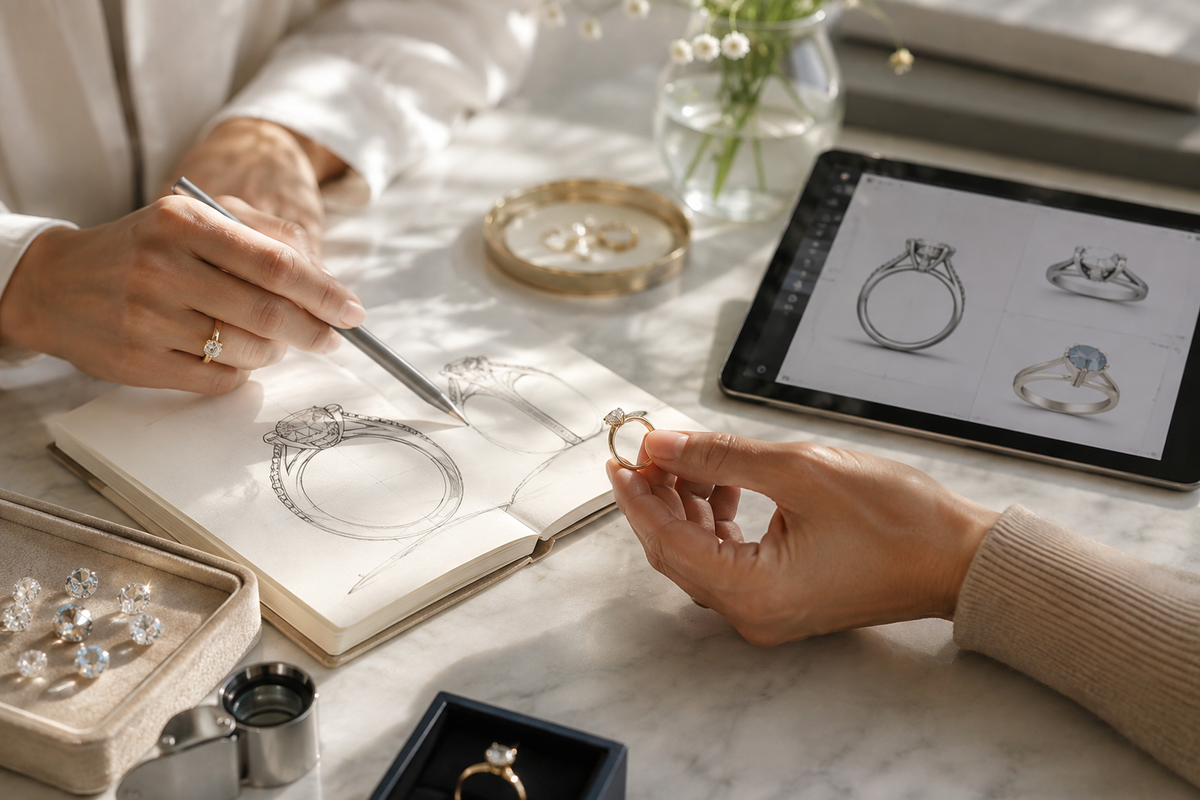
If you would like something more personal, Joyce’s offers custom jewelry design using computer-aided design and 3D modeling. Customization may allow you to create wedding bands that share a meaningful design element while remaining comfortable and appropriate for each person.
Wearing a Wedding Band Beside an Engagement Ring
When a wedding band is worn with an engagement ring, the two pieces should be considered together.
The height and shape of the engagement ring setting may determine whether a straight wedding band sits flush beside it. Some engagement rings leave enough space beneath the center setting for a straight band, while others may pair more naturally with a curved or contoured design.
Metal color is another consideration. Matching metals create a coordinated appearance, while contrasting colors can make each ring more distinct. Neither approach is more correct. The decision depends on the look you want to create.
Width and proportion also matter. A very wide or highly detailed wedding band may compete with the engagement ring, while a delicate band can provide balance. Diamond wedding bands add brilliance, while a plain metal band can create contrast beside a detailed engagement ring.
Try the rings on together and view them from several angles. Make sure they feel comfortable, sit securely, and create the overall appearance you want.
Caring for a Wedding Band Worn Every Day
Everyday wear will naturally affect a wedding band. Thoughtful care can help limit unnecessary damage and keep the ring looking its best.
Remove your band before lifting heavy weights, operating machinery, handling harsh cleaning products, or completing work that places significant pressure on your hands. This protects both the ring and your finger.
At home, store the band in a separate compartment or soft pouch when it is not being worn. Keeping jewelry pieces separated helps prevent them from rubbing against one another.
For routine cleaning, use methods appropriate for the ring’s metal, finish, and gemstones. A soft cloth and mild cleaning approach may be suitable for many designs, but rings with special finishes, mixed materials, or detailed settings may require different care.
It is also beneficial to have frequently worn jewelry inspected professionally. Joyce’s provides jewelry repair services as part of our commitment to helping customers care for meaningful pieces. An inspection can identify worn settings, surface damage, or other concerns before they become more serious.
Finding the Wedding Band That Feels Like Yours
The right wedding band is not determined by one metal, width, or finish. It is the ring that feels comfortable on your hand, complements your personal style, and supports the way you live.
Begin by comparing precious, mixed, and alternative metals. Try several widths rather than choosing based only on appearance. Pay attention to the interior fit, exterior profile, weight, finish, and how the ring moves with your hand. If you are selecting bands as a couple, look for thoughtful ways to coordinate them while respecting each person’s individual preferences.
With more than 40 years of experience spanning two generations, our team understands that a wedding band is more than another piece of jewelry. It is a lasting symbol that becomes part of your everyday life. Visit Joyce’s Jewelry in Uniontown to view our wedding band collection, compare styles in person, and let our team help you find or create rings that feel right from the moment you put them on.